The Five Artists Whose Deaths Crushed Me
In the early evening of Sunday, Dec. 14, Sandy and I were winding down the weekend with a cocktail on the couch when breaking news upended our night.
As I sipped my drink while mindlessly scrolling social media, my eyes landed on a random post mourning the death of actor, director, and producer Rob Reiner. It said he and his wife had been murdered.
“What the hell?” I said under my breath.
It must be a mistake, I thought, some errant internet rumor, a sick joke, because I hadn’t seen a news alert flash across my phone. And such a tragedy seemed incredulous.
But when I opened a browser and typed in Reiner’s name, links from various credible sources indeed indicated that Rob Reiner and his wife, Michelle, were found stabbed to death in their Los Angeles home.
I gasped and showed my screen to Sandy, who also gasped at the headlines and held her hand to her mouth, eyes wide with shock. About 30 minutes later, an official news alert arrived, confirming the initial reports were accurate.
As a fan of Reiner’s work, I was devastated. I was also suddenly aware that my reaction to his death lay not just in sadness over another human dying but in the loss of someone whose work I’ve long been a fan of.
It got me thinking about other losses over the years that hit hard for that very reason. I began recounting those rarified people whose work was so meaningful in my life—so beautiful, so moving, so intertwined in my appreciation for music, film, and literature—that their departure left me feeling empty, even depressed.
My latest for “A Fan’s Notes” pays tribute to the five artists whose deaths crushed me, each with a vignette explaining why.
Honorable Mention
Before digging into the Top 5, there are dozens of other famous deaths over the past 40 years that impacted my life in some way. To be included on this list, however, the artist’s work had to really fucking mean something to me. Also, I had to be alive and a big fan of theirs when they passed.
In some cases, a notable death occurred while I was living, but not yet at an age where I could truly mourn their loss. Elvis’ passing in 1977, when I was only 6, is one that immediately comes to mind. The same goes for John Lennon being gunned down in 1980, mere days after I turned 10.
I didn’t become a fan of author Frederick Exley, whose book “A Fan’s Notes” is the inspiration for this blog, until after he died, so he doesn’t qualify. Famed Southern writer Walker Percy died when I was 19, but that was before I read “Lost in the Cosmos” and his other tomes, so he’s ineligible.
Other factors: How old they were when they passed, how much art they produced in their lifetime, and how much more they might’ve given the world. Those who died in their prime ranked higher than those with vast accomplishments. Mostly, though, it was about the emotional impact I felt—something that’s hard to measure.
As I winnowed the list down to the essentials, I had some tough cuts to make, so I want to start with a few honorable mention selections. Here they are, the “second” five, in random order:
- Prince, the music megastar, was only 57 when he died in 2016 of an accidental drug overdose.
- Walter Becker, the cofounder of Steely Dan (the band is on my Mount Rushmore), died in 2017 at age 67.
- Michael Hutchence, the lead singer of INXS (the first band I saw in concert), committed suicide at 37 in 1997.
- Larry Brown, the Mississippi writer whose early books I devoured, died way too young at 53 in 2004.
- John Denver, the king of Rocky Mountain music, was killed in a plane crash in 1997 at age 53.
I was a fan of all those artists at the time of their deaths. I mourned the loss of what could’ve been with their music or writing, but their passing didn’t quite hit me like those in my Top 5, which I now present.
My Top 5
5) Rob Reiner
Reiner made the Top 5 partly because his untimely and brutal death at age 78 inspired this list, but it’s mostly because his body of work is legendary, and he still had much more to give.
Reiner’s movies influenced my youth. I watched him, of course, as Meathead in “All in the Family.” I saw his film “Stand by Me” in the theater in 1986, a movie that was significant for me as a 15-year-old. And he made so many other brilliant films: “This is Spinal Tap,” “The Princess Bride,” “When Harry Met Sally,” “Misery,” “The Ghosts of Mississippi,” and more.
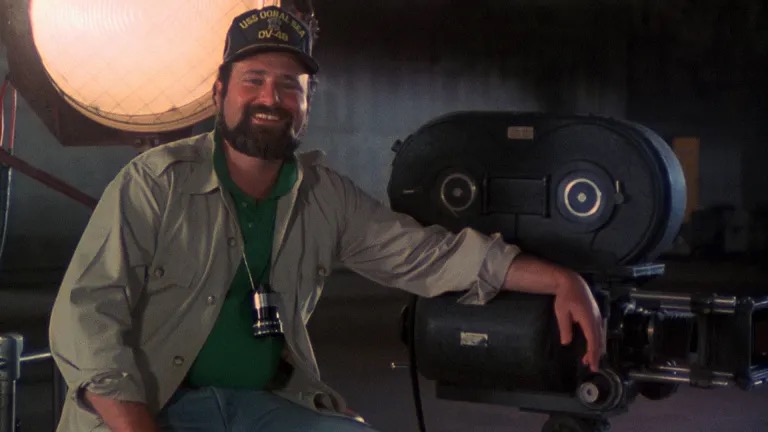
Over the past several weeks, as I reflected on Reiner’s legacy and read about his impact on film and television, I grew deeply sad that this artistic genius would never give us another movie to enjoy. (I also lament the loss of his political activism.)
Nothing quite sums up Reiner’s legacy better than these words by Wil Wheaton, who starred as Gordie in “Stand By Me.” It’s from his moving blog post about Reiner:
Generation X grew up with Rob. We watched him on “All in the Family” when we were little, and as we came of age, he made movies about our lives as we were living them: movies about growing up, falling in and out of love, about seeing the goodness that exists inside every single person, if only they are open to it. He told us stories about the strength of the human spirit, and he made us laugh. Oh, how he made us laugh.
I hope you’ll check out the entire piece. It’s beautifully touching. And it showcases Reiner’s humanity as much as his art.
4) Leonard Cohen
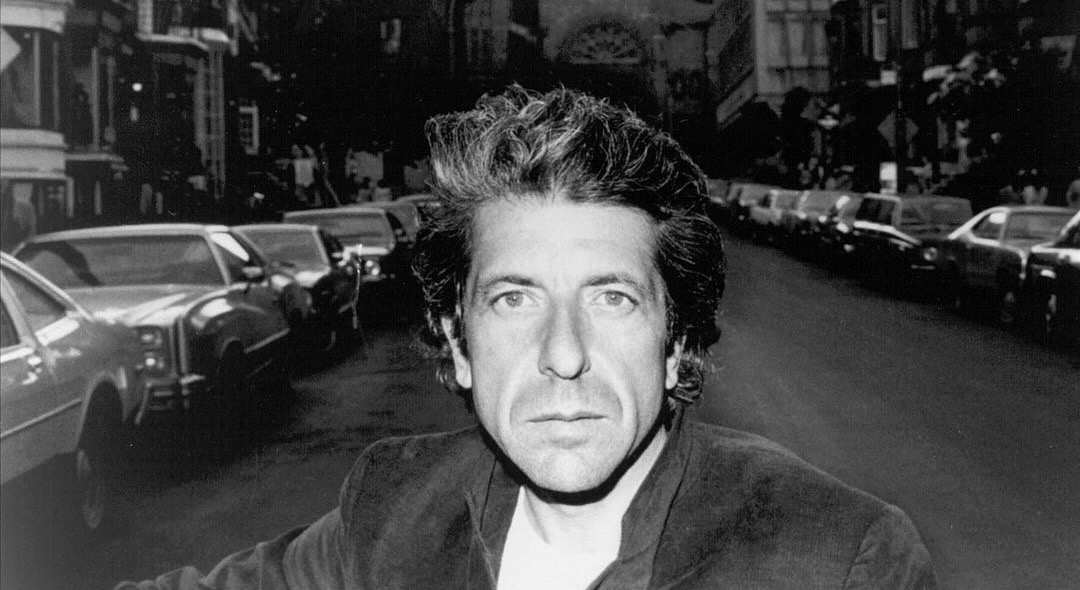
The Canadian singer and poet, who is firmly entrenched on my musical Mount Rushmore, ranks a notch above Reiner because his work was personally more important to me.
Still, he sits lower than the top three because he lived until age 82 and produced decades worth of beautiful music and literature. A few days after he died in 2016, I wrote a short tribute on Facebook titled “Leonard Cohen’s Light.”
Here’s one snippet from that post to show how much he meant to me:
Certain artists speak to us more than others, their music enduring through the different stages of our lives because of remarkable talent and timeless beauty. That’s Cohen for me.
I’ve written tangentially about Cohen in several blogs, including my ode to Jeff Buckley, whose cover of Cohen’s “Hallelujah” is the definitive rendition of that beautiful song; my examination of Cohen’s song “Avalanche” and Nick Cave’s brilliant covers of it; and a deep dive into one of Cohen’s most famous lyrics.
Because he means so much, he was bound to make the list. But something else made the loss of Cohen that much worse: He died the same week that Donald Trump was elected president for the first time in November 2016.
Cohen’s lyric “Everybody knows the good guys lost” rang true that week and still does. It summarized the situation perfectly.
During the cold open of that week’s “Saturday Night Live,” on Nov. 12, 2016, Kate McKinnon sang Cohen’s “Hallelujah” (while dressed as Hillary Clinton) to pay tribute to Cohen’s passing and offer a lament for what was in store for our country.
Even in death, Cohen’s spirit helped us heal. And it’s a voice we need now more than ever.
3) Jerry Garcia
In 1995, during my first summer working in Denali, my good friend Britt Summers flew to Alaska from Memphis in early August for a visit. We smoked a little herb at the Talkeetna Bluegrass Festival (well, one of us did). We rafted the Nenana River. We encountered a moose during a backcountry trip. We drank a lot of beer.
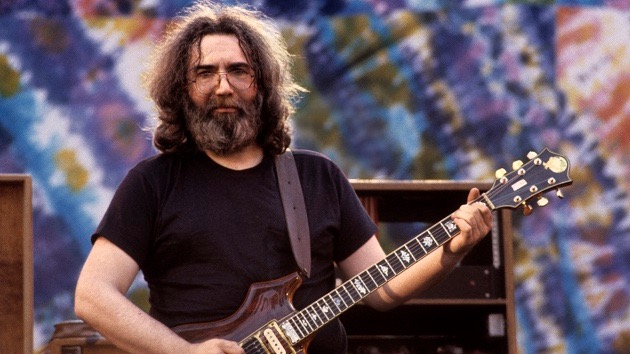
We also reminisced about the previous spring when the two of us, along with several friends, attended a pair of Grateful Dead shows at the Pyramid in Memphis. That was the first time most of us had seen the legendary band. Though I later read the concerts were average or worse because lead singer Jerry Garcia was in poor health, we were mesmerized by the experience. We were fans for life.
On Wednesday, Aug. 9, Britt had to fly home, and I accompanied him back to Anchorage. During our four-hour drive south, we spotted and almost hit a black bear crossing the road—just moments after Britt asked me about the potential for animals on that stretch of the highway, and therefore was on high alert for that possibility. We felt in tune with the universe and thanked it for the guidance.
Britt and I then chatted at length about the Dead, their music, and Deadhead culture. We discussed the unbridled fanaticism—the borderline worship—of Garcia. I remember wondering aloud, “Crazy to think how fans will react when Jerry dies. What will all those Deadheads do?”
We pondered this for a minute, but didn’t really have an answer. We concluded that whenever Jerry died—something we hoped wouldn’t happen for many, many years—his fans would be lost.
A few minutes later, we picked up the Anchorage public radio station. The moment we dialed in, a reporter interrupted the broadcast with breaking news:
“This just in: Jerry Garcia, lead singer of the Grateful Dead, has died at the age of 53.”
Britt and I looked at each other, mouths open, stunned, saddened, silent.
It took us several moments to collect our thoughts. In some strange way, we realized we were indeed dialed in with the universe, as if we had subconsciously picked up some cosmic signal out of the Bay Area alerting us to Jerry’s passing before formally hearing the news. I get chills to this day remembering how it happened. And I’m still sad he left us too soon.
Though we knew we wouldn’t see the Grateful Dead perform ever again, we also knew we’d forever have the memory of those shows back in April. We knew we’d always share this somewhat trippy premonition that feels like yesterday, even decades later.
And we knew that though Jerry’s life ended way too early, his legacy would not fade away.
2) Robin Williams
In September 2014, I flew to Colorado to interview for a writing and editing job just outside Boulder. After the interviews, I had some time to kill, so I drove into downtown Boulder for a beer at one of my favorite breweries, the Mountain Sun on Pearl Street.
It was a beautiful late-summer day, the fall colors not yet visible but eager to emerge. After finishing my pint, I decided to stroll through Boulder while awaiting what I hoped would be a phone call and job offer. As I ambled around town, I remembered that the house used as the façade for the 1970s sitcom “Mork and Mindy” was nearby. I Googled the address and headed to 1619 Pine St., only a few blocks away.
Approaching the house was bittersweet. As I looked at it, I immediately thought about how much Robin Williams as Mork was one of the first roles I absolutely loved, and I smiled. Then I grew sad about what happened weeks earlier.
Williams, who suffered from a host of physical and mental ailments, had committed suicide on Aug. 11 at age 63.
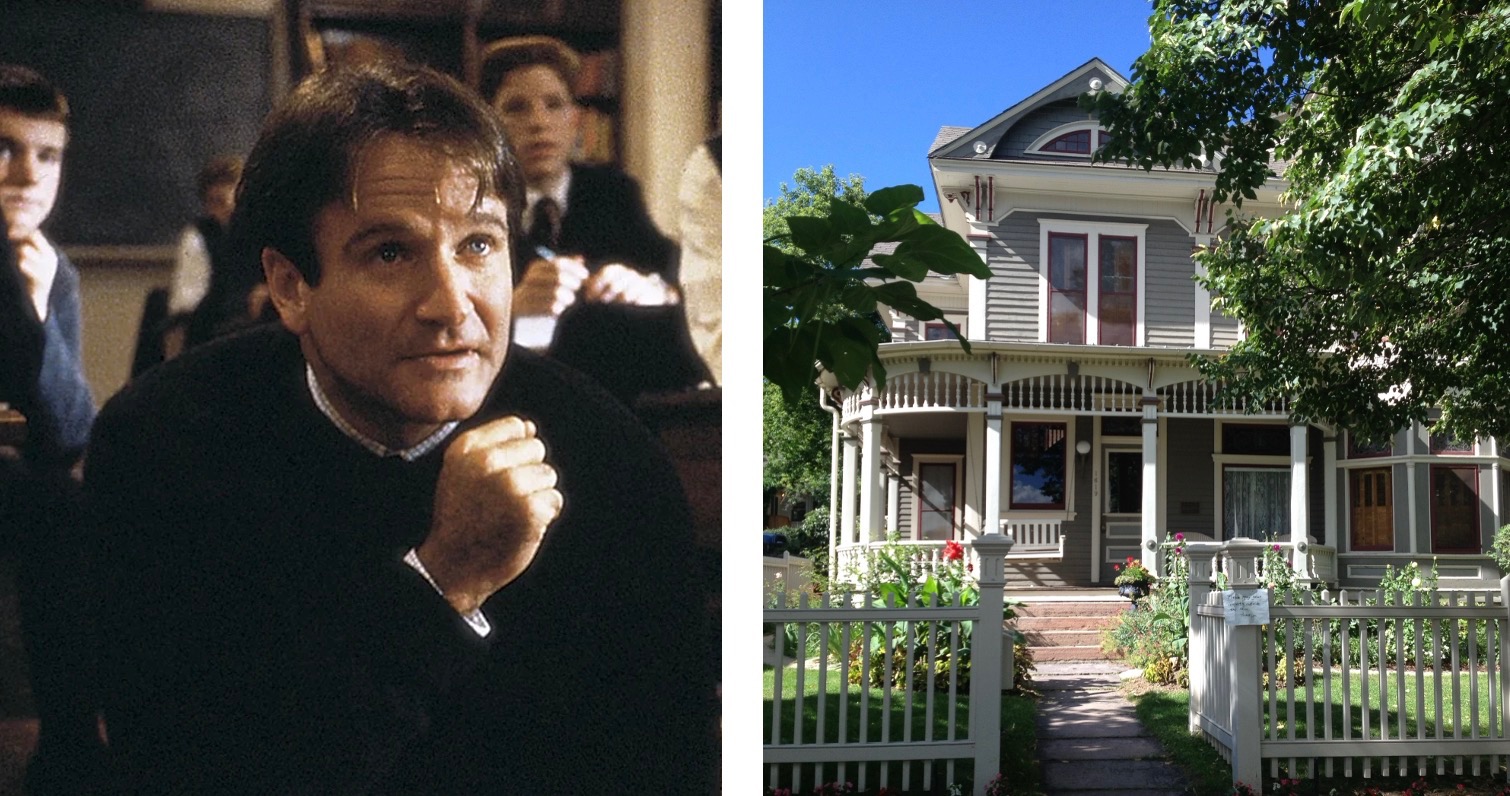
On the home’s front gate was a sign that read: “Please pay your respects outside the fence.” I guess other fans had wandered over to do the same thing I was now doing, hoping to remember a little bit of what this comedic genius had given us.
Williams’ death was a personal gut punch. For regular readers of “A Fan’s Notes,” you might recall I’ve mentioned him twice in previous blogs. The first was my post on a Baudelaire poem and a reference to Williams’ performance in “Dead Poets Society” (Oh, Captain, my Captain!). The second was my blog about the Denver Broncos and the role “Mork and Mindy” played in attracting me to Colorado, where I now live.
“Dead Poets Society”—soon to be the focus of an entire blog—is one of my favorite movies of all time, but many of Williams’ films stand out: “The World According to Garp,” “The Best of Times,” “Good Morning, Vietnam,” “The Fisher King,” “Good Will Hunting,” “Mrs. Doubtfire,” “The Birdcage,” and more.
I’m glad we have all those works to celebrate, but the world is a less funny, less joyous place without Robin Williams.
Rest in peace, Captain.
1) Jeff Buckley
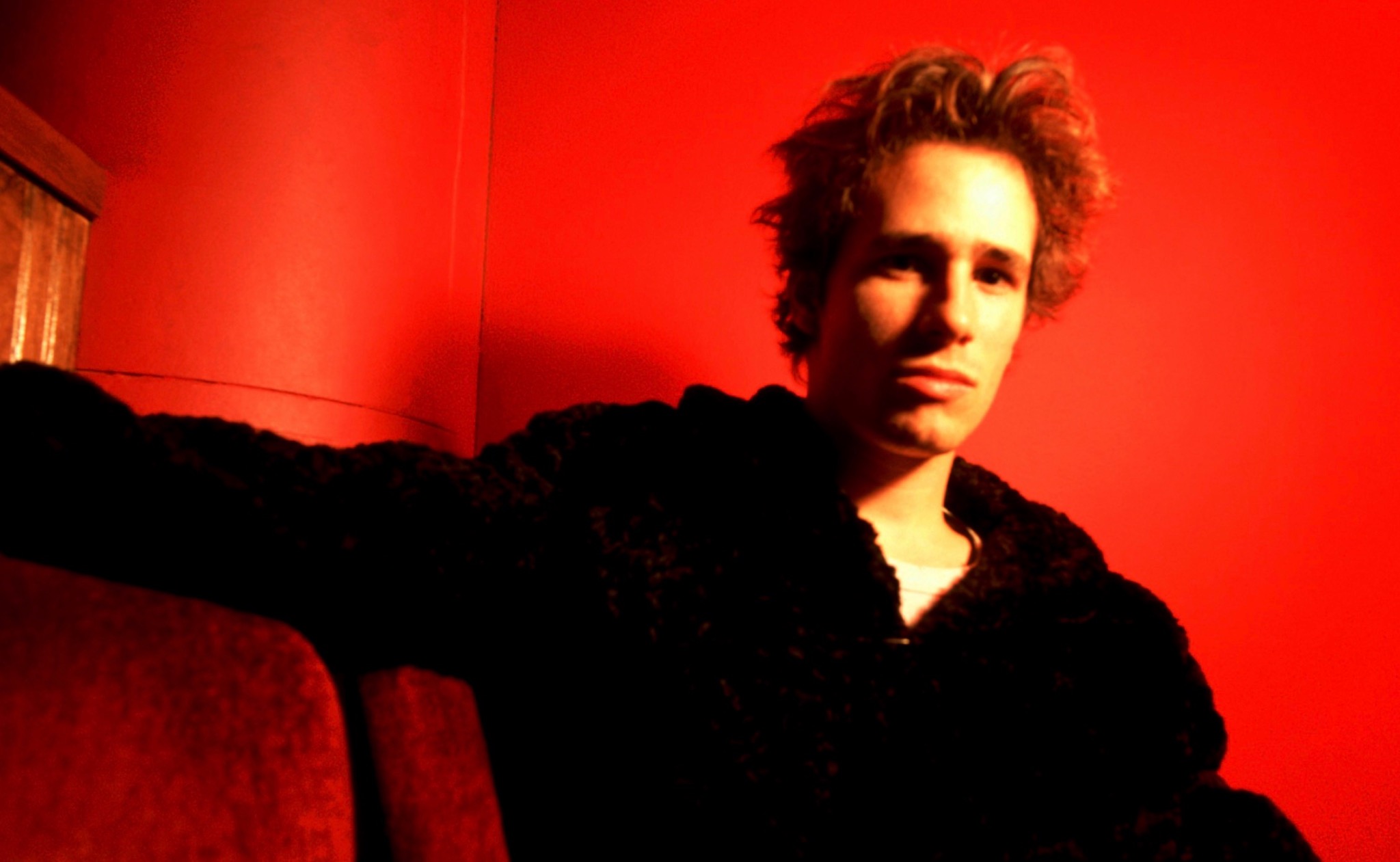
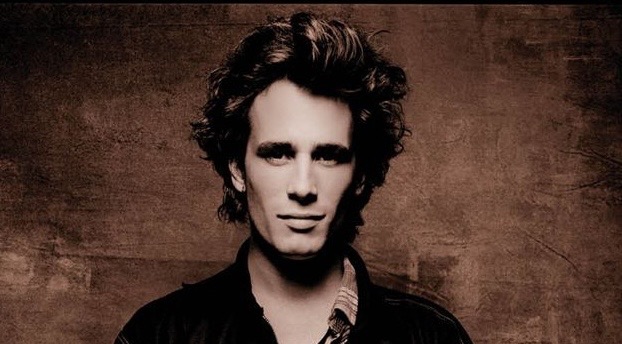
No one’s death was as devastating to me as Jeff Buckley, the singer who drowned in the Wolf River, a tributary of the Mississippi, in May 1997. It’s why I chose his photo for this blog’s lead image.
Buckley was only 30 when he died in my hometown of Memphis, though I was a world away in Alaska. He had given the world only one proper album.
I featured Buckley and that album in a 2024 post, A Meditation on Jeff Buckley and His Masterpiece, ‘Grace.’
It’s one of my favorite fans notes for several reasons, including my origin story with his music, the personal connection of seeing him live mere weeks before he died, and the twist at the end that I later realized wasn’t a coincidence at all.
I hope you’ll read the entire post if you haven’t already, but here’s a nugget explaining why he is No. 1 on my list of artists whose deaths crushed me.
I’ll always feel a connection with this incredibly talented musician for several reasons: Because I saw two of his final shows and witnessed his genius live. Because of his time in my hometown of Memphis, including where he lived his final months. And because of where he died, in a place I know and love. It all seems so familiar, so close.
But the ultimate closeness I feel to Buckley, the one I’m sure scores of devotees experience daily, comes from regularly listening to “Grace,” an album I’ve heard countless times and will continue to play until my last goodbye.
For that, I’m forever a fan of Buckley and his masterpiece—and I’ll forever marvel at the way fate brought me to them.
I’m listening to “Grace” as I write this. My eyes are welling with tears as I think about what this record has meant to me over the years, how its beauty overthrew me from the moment I heard it, how it’s still an essential album in 2026—and how it signaled the beginning and the end of a musical genius.
There’s a new documentary out about Buckley’s life and death called “It’s Never Over, Jeff Buckley.” I haven’t watched it yet. Perhaps I’m not ready.
But when I do, I may write yet another blog about the impact his brief life has had on mine because I have more to say about this singular artist whose death I still mourn all these years later.
Well, that’s my list—at least, that’s my list as of the beginning of January 2026. Could the rankings change over time as other artists die? Sure. But at this stage in my life, these are the five whose passings sadden me the most.
Thanks for reading. May the artists you revere, the ones you’re a fan of, continue to create moving works of music or poetry or film for years to come.
And when they do depart this Earthly plane and move onto the next life, may their art forever be a blessing.
Post a comment